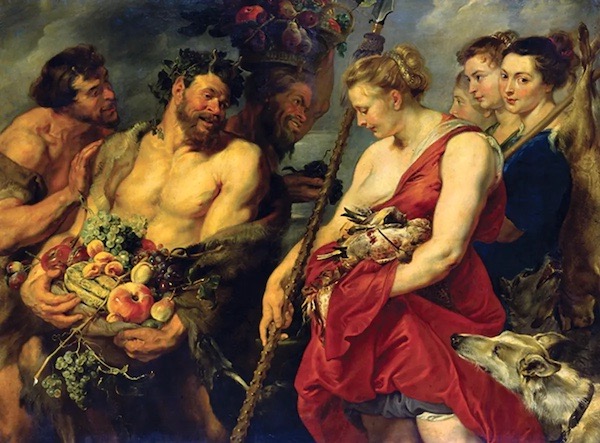
Strictly speaking, the term “rules of engagement” belongs primarily to international politics, where it strictly defines circumstances, conditions, and parameters of provocative actions towards an opposing force… But it’s just so universally descriptive! Both the idiom itself and its underlying meaning! When to make a move, how to proceed, what steps to take… It is truly applicable to any kind of interrelationship, including the affairs of love and lust – very much so to the ones occurring in our lives, but especially to those at the heart of romantic storytelling.
I don’t necessarily insist that the mechanics of Romance – its definitions and the procedural stipulations – are as strict as the military routines. Naturally, it allows for more freedom, more interpretive treatment, more flexible – I would even say artistic – enactment of its many highly nuanced facets. Yet, the rules and the protocols are definitely there, constituting the structural foundation, determining what is and what is not “an irresistible attraction“, “the one true love“, “the cosmic connection of the souls” – like skeletons of specific organisms that distinguish the amorous breeds from everything else. The mandatory hooks designed to draw us into the stories about Love.
These defining literary principles have deep ancient roots. In the Minoan oral-poetic tradition going back to 18th century BCE, later retold by the Greeks. In Solomon’s Song of Songs – that ode to sexual desire and intimacy, uniquely disregarding the Hebrew Bible’s primary interests of morality and ethics, covenants and laws. In Aristotle’s dramatic postulates laid out in Poetics.
And once we get to the New Testament: in his Epistle to the Corinthians – apparently very confused about their faith, and morality, and relationships, seeing many things “through a glass, darkly” – Paul, in recognition of Love’s complexity and the multitude of its attributes, tries to interpret it for his followers in simple, non-allegorical, very comprehensive terms:
“Love is patient, love is kind. It does not envy, it does not boast, it is not proud. It doesn’t dishonor others, it is not self-seeking, it is not easily angered, it keeps no record of wrongs. Love does not delight in evil but rejoices in truth. It always protects, always hopes, always perseveres.”
Corinthians 13:4-7
Biblically idealistic opinion – no question about it. And as such it works, of course, like a proper temptation, triggering me into reminding the readers that True Love is first and foremost is utterly Merciless and Takes no Prisoners. The ancient Greeks understood that: Eros is Aphrodite’s son and he serves on the alter of love, but his father is Ares – the god of war. Eros is never without his bow and arrow. And it’s that weapon that he uses to pierce the hearts of humans and gods alike – thus, making them to fall in love. Quite frequently the feelings are unrequited and even if they are mutual – most of the time it’s an ordeal full of trials and tribulations. In the course of the affair, the lovers’ own wills get twisted completely out of shape. Moreover, others around them end up being hurt left and right: if there’s a pre-existing girlfriend, or a boyfriend, or a spouse – that’s just too bad. Whether they are factually abandoned for the sake of Love or not is irrelevant – they’ll end up in pain either way…
Well, that acknowledged, I have to says kudos to Paul. Even though a couple of the attributes he pointed out can definitely be disputed in the context of the contemporary arts, he did end up identifying a few of the most fundamental characteristics you can recognize in many a romantic tale. Including the Unconditional Forgiveness. Because Love the Forgiving truly keeps no records of wrongs…
Equipped with an analytical scalpel, we can definitely parse a significant array of these structural elements, which consistently contribute into the creation of romantic stories. True Love’s unequivocal Blindness, comes to my mind next. Not only that it’s most prominent in all artistic media, but it gave rise to its own sub-genre of beauty-and-the-beast fables – old and new; with physical, mental, or identity distortions alike.
The lovers’ persistent willingness to Move Mountains (or pianos for that matter) for their beloveds also has morphed into a few diverse variants, including, but most definitely not limited to, such tendencies as the Boundless Indulgences; the inclination to Risk Everything – family, career, wellbeing, life – for Love’s sake; and even the tragic Self-Withdrawal as means of fending off the mortal danger threatening the one-and-only – you know, when leaving appears to be the only way to keep them alive…
Okay, I can’t help myself: Speaking of moving pianos: How bizarre was it that E.L. James made The Piano Christian Grey’s favorite movie?! Bizarre not just because it’s a Chick Flick (Please, don’t get offended! I’m using this term in the most respectful, most adoring way.), but precisely because it’s so thoroughly romantic. Moreover, it’s a movie about a self-liberated, spirited woman who repeatedly chooses her feelings over rules and conventions! So, how is it possible that a man who has been deliberately shutting himself off of everything and anything that would affect his heart; moreover the one who’s been on a long-running mission to control women and punish them for their disobedience, would choose that as his favorite movie? Okay, we understand – the piano and all that. But then why not The Piano Teacher? That movie has not just pianos and music, it got emotional disturbances AND (!) S&M. Too tragic? Too highbrow? Maybe… And I understand that the author herself most likely found the mutual sensual seduction depicted by Jane Campion enthralling. But that’s because the author is a chick! Yet, the protag is not!
I apologize. Back to the subject matter. One of the most cardinal principles of romantic storytelling – I would even assign it a cornerstone significance – is the designation of a Prince and a Princess. It’s a broad, multifaceted notion and I definitely hope to dedicate more than one or two future posts addressing various components of this fundamental concept. The important thing to always keep in mind is that it is absolutely gender-neutral. And I don’t mean just in terms of the lovers’ sexual orientation. Even in a heterosexual couple, a woman can totally be – and very often is – the Prince. It’s more about the qualities each side brings into the relationship:
- The character, to whom the role of the Prince is assigned, is The Rescuer, “the knight in shining whatever”. They consider the acts of redemption and protection – whatever they may entail – to be of paramount significance.
- Because of that Princes must have all sorts of Powers, weaponry, and resources in their arsenals. And, in pursuit of their shielding mission, they grab and wield them heroically – in perilous and benign situations alike.
- Some of these powers must be Magical, no matter how realistic and prosaic the settings are. Over the course of the story, a Prince is simply expected to perform a miracle (or miracles). Whether it’s waking up a dead princess (and her entire entourage) with a kiss, or resisting an unforgivable death curse, or managing a secret organization with unlimited reach, or swording a rapist, or rebuilding a tumor-ridden spine – some sort of superhuman acts are bound to take place for the sake of reconfirming the Prince’s gallant status.
- Consequentially, a Princess always expects Greatness from her Prince, whatever that may be in the context of the tale.
- But it’s the Princesses who usually possess the intrepid Inner Strength and the Virtue of Faith in Love’s powers. They are usually the ones with the resolve to Sacrifice themselves if they feel that they must…
- Etc…
Even in this brief introductory overview, it’s simply imperative to mention the Enchantments of Serendipity and the Twists of Fate… “It must be fate…” is a staple sentiment of many a romantic engagement. No matter how many twists and turns the Roads of Destiny take, the collision between our heroes is inevitable. The more loops, the better. The chancier, the more surprising the meetings – the more thrill will be delivered to the audience…
And so on and so forth… They are fairly established and conventional, but there are quite a few of them – those nuts and bolts of the romantic mechanics…
At some point in Fireworks and Other Illuminations, Regina Cohen and William McGrath talk about the recurring patterns of human tragedies, comedies, dramas, mysteries, romances, fantasies… They persist – William suggests – because we are all built with the same set of emotional receptacles and response mechanisms…
And that’s the core raison d’être of this blog: to peek inside the clockwork that unfalteringly has been keeping the romantic storytelling running through millennia. To uncover its secrets and trace their presence in the multitude of tales that continue to captivate us: in books, on canvases and stages, big and small screens, through personal headphones and public mega speakers… To discover why and how they work. It could be fun, don’t you think?
Are you interested in exploring the romantic tropes and rules of engagement I used in Fireworks and Other Illuminations? Start by visiting the novel’s landing page here → “Fireworks and…” the Novel
Discover more from Miriam Cohen's Secrets of Romantic Fairy Tales
Subscribe to get the latest posts sent to your email.

