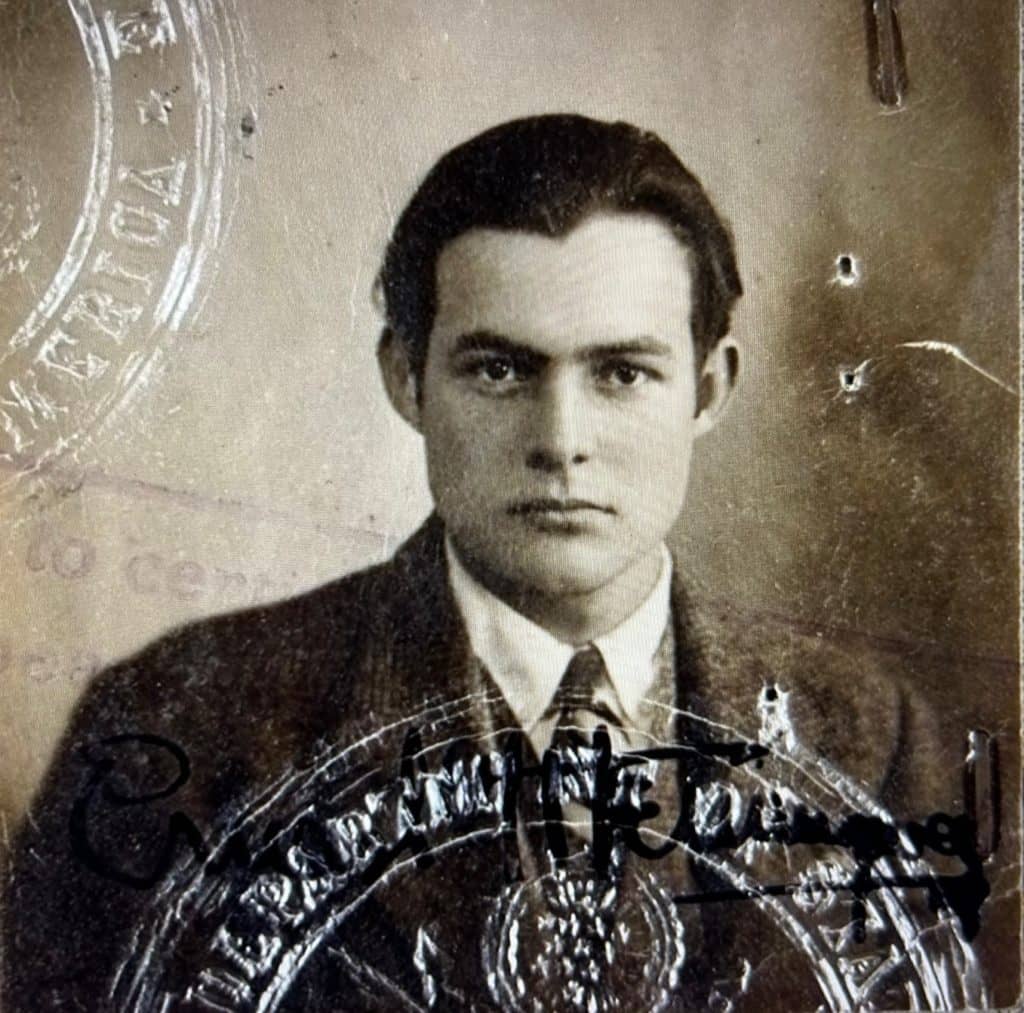
We are rolling way back in time here…
Honestly, this subject wasn’t even on my list of the prospective topics. But I recently re-read The Sun Also Rises. It was my first revisit in decades. And I just couldn’t help thinking about 26-year-old Papa… oh, pardon, his alter ego Jake Barnes… as just that—the most romantic character of his time.
No, not Jimmy Gatz…
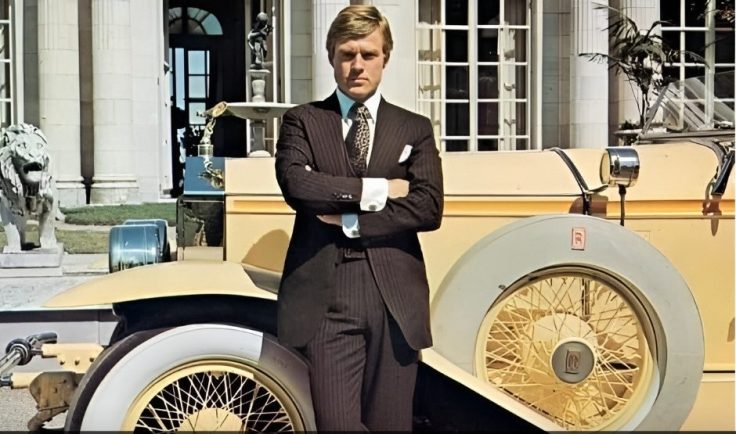
I expect that most people seeing this post’s title would automatically twitch into thinking of Jay Gatsby (né James Gatz) as an obvious choice for a romantic hero of the 20s. But as far as I am concerned, he is not even a distant contender.
That little chat about F. Scott Fitzgerald that William and Regina’s daughter, Cassandra, have in Chapter Nine of Fireworks and Other Illuminations is clearly a reflection of my own feelings on The Great Gatsby. It primarily has to do with the novel’s intent of social criticism, though. The simple truth is I’ve never even considered its author being very much concerned with romantic motivations—old flames and cheating spouses notwithstanding.
Reading Fitzgerald, Jay Gatsby never impressed me as a hero. Period. Of course, comparatively speaking, he seems like a better person than Tom. But he is a liar and a coward. Moreover, a prohibition-era gangster!
Obviously (at least to those who read my stuff), I see no problem in romanticizing, redeeming, and absolving romantic heroes and heroines with criminal past. But a large-scale mobster of the liquor bootlegging era? Who knows what kind of bloody secrets were behind those vast riches? It’s one of the novel’s great shortcomings, actually: its lack of depth—the author never dug into the matters outside of his immediate exposure.
Plus, I always felt that Jay’s motivation for taking first the blame and then the bullet for Daisy’s murderous driving was quite egotistic and had nothing to do with his purported feelings. A person lost in his own darkness. Throughly disillusioned with his own existence.
It begs the question: are such people even capable of genuine affection for… anything?
Love without affectation
On the other hand, with Hemingway and Jake—it’s all about irresistible love and urging passions… For women and places; the taste of wine on your lips and the rush of blood in the heart; the tag of fish on the line and the deep dive into the sea…
Astonishingly, he manages this emotional intricacy without any trace of overbearing exaltation. He invites us to absorb his most profound sentiments in remarkably subtle ways—by just describing the transpiring affairs and the surrounding circumstances, not the feelings. It makes the ensuing ambience only so much more potent. We inhale it with every word. Unforgettable…
Case in point: Numerous creators of all types and ranks have been declaring their fondness for Paris in various languages, colors, and shapes. But its Hemingway’s appreciative familiarity with La Ville Lumière and its private corners that takes my breath away. I know exactly how this casual intimacy binds us with places that we adore.
He crystalized it more extensively, of course, later on—in A Movable Feast. But it’s also unmistakably present and maybe even more immediate in The Sun Also Rises. No heart-wrenching songs, flowery odes, or colorful pictures. It’s just there, in the mere notion of knowing what and how to enjoy…
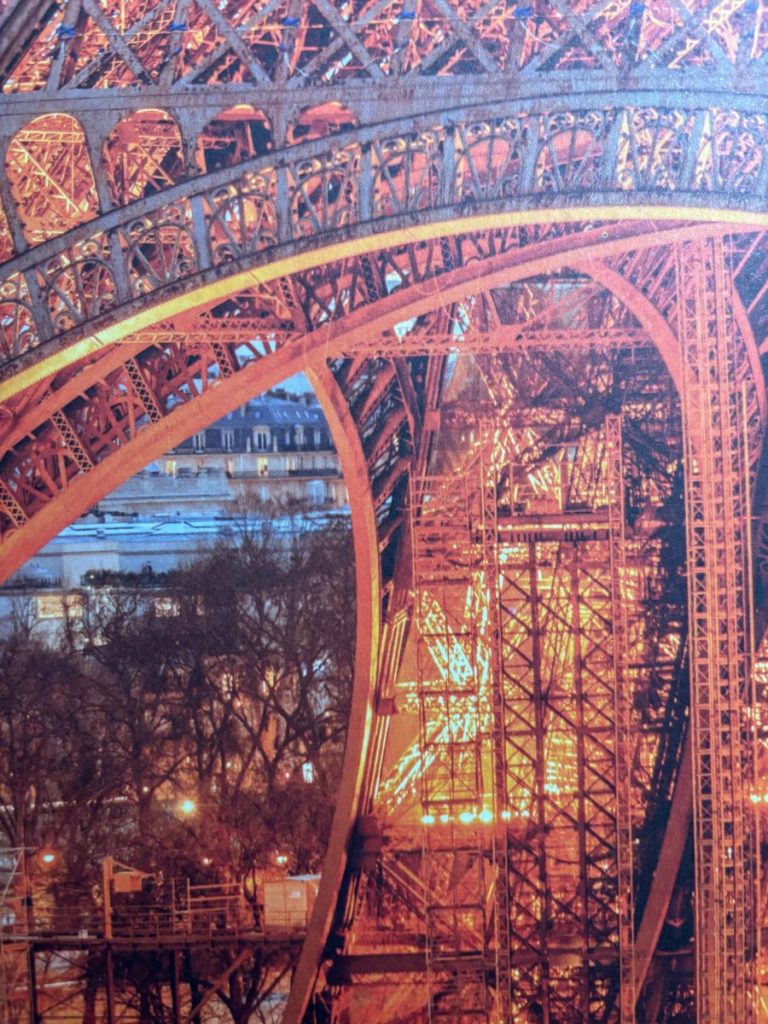
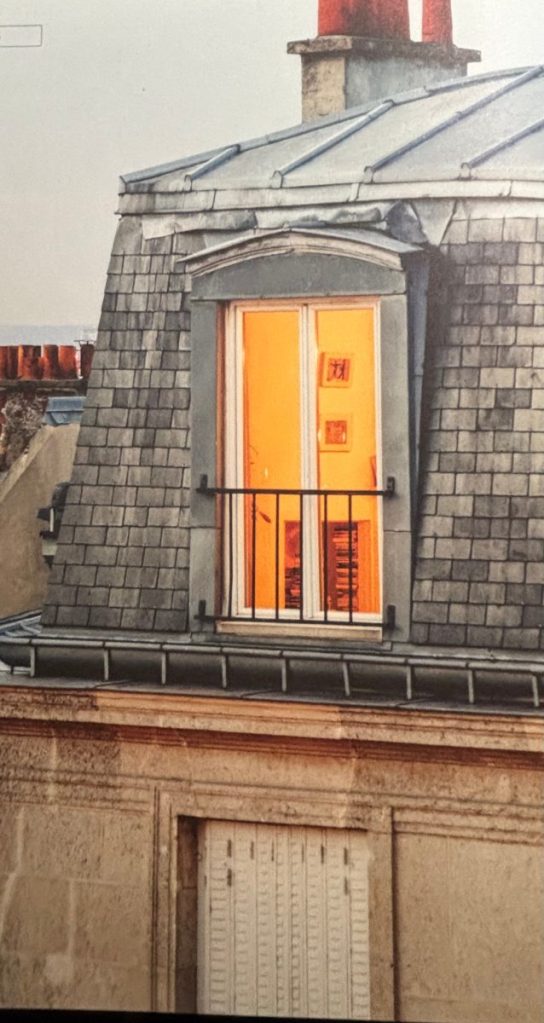
You can just imagine him on the Left Bank, in the 6th Arrondissement—writing in that very Parisian apartment under one of those mansard roofs. Or sipping some excellent wine in a Montparnasse night haunt, while America suffers under the dry spell of the prohibition. (It’s not surprising that after he left Paris in 1928, he settled in the semi-lawless Key West, where prohibition was barely enforced.)
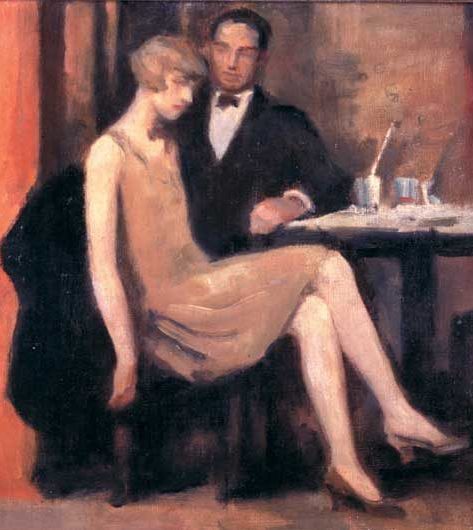
This understated demonstration of adoration turns even more poignant as Jake, Bill Gorton, and Robert Cohn travel through Basque Country—from the French side and into Spain. On the surface, he is just describing the scenery rolling in front of their eyes.
“We came down out of the mountains…”
“We climbed up and up and crossed anoather high Col…”
“…Trees along both sides of the road, and a stream and ripe fields…”
It’s almost as sparse as unedited footage of some nature travelogues you can find online nowadays… But then Jake turns from the front seat and looks back at Bill. And Bill just nods his silent appreciation in response… And that’s it… He leaves the rest for us to feel.
The tip of the iceberg
This intention of not interfering with the audience’s perception of the events is very impressive to me. As far as I’m concerned, it’s even more important than the methodology itself—that reserved Hemingway’s style he himself described as the “iceberg”. Leaving what lies beneath the eye level to the readers interpretations is an incredibly respectful attitude towards their intelligence and a true literary achievement.
When I was 17, I attended a conversational panel with a famous Soviet filmmaker and writer Aleksei Kapler. He was in his seventies already—full of many tales from his creative and personal life, which included dating Stalin’s daughter, imprisonment in GULAG, and making a movie starring Elizabeth Taylor and Jane Fonda.
One of the stories he told went all the way back to the times when he was a screenwriting student. A writing-craft instructor brought a book into the class. Its cover was entirely obscured by the wrapping paper. He started reading from it: “The woman stood on the train platform. The man came close to her. ‘Is it going to rain?’ the woman asked.”
The instructor looked at the class, “Can you guess the writer?” “Hemingway! Hemingway!” the students cheered—all secretly smitten with the first two novels and a story collection recently published in the USSR. “No,” the instructor said, “It’s a practice dialogue from the English Language textbook. Just because it’s terse, it doesn’t make it Hemingway…”
As I said, the technique of linguistic sparsity alone is not enough. The unseen, yet clearly tangible, depth beneath is what makes it extraordinary.
Reality vs. fiction
Famously, this book’s genre is defined as roman à clef. The real-life events and people behind its fictional facade create a dichotomy between its documentary and imagined facets. Thus, I feel obligated to mention that I never took Hemingway’s antisemitic and racial slurs personally. I choose to believe that they are delivered to us as illustrations of the actual events and attitudes of the time.
God knows—antisemitism and racism were, are, and always will be on many a gentile mind. As my dude Kanye West said, “Racism’s still alive, they just be concealin’ it.” That’s the truth of life. I can’t find fault in reflecting it in the life’s depiction.
If you ask the Internet, it will serve up the claims that some antisemitic remarks could be found in Hemingway’s private writings too. To be honest, I haven’t read any of his diaries or letters. And let’s face it: if I didn’t develop very early in my life an ability to separate artistic geniuses from the narrow-minded humans they inhabit, I would’ve missed out on a lot of music, art, and literature.
However, is it possible—I ask myself—that Gertrude Stein would agree to be a godmother to a child of a man who hated Jews? Seems a bit absurd to me.
That said, I am absolutely conscious that what we have in this novel is an extraordinarily idealized version of the author’s alter ego. With respect to his relationships to everyone and everything, not just his personal standing on bigotry.
He even goes to the extreme of physically impairing Jake’s ability to fulfill his yearning for the object of his affection. He is unable to have sex because of the war injury. Interestingly, with this literary tactic Hemingway actually steps away from his unaffected-chronicling style for a moment. Instead, he allows himself to embrace the old-school metaphoric tools in order to manifest his own real-life constraints.
Lets not forget that at the time this book was conceived, the married author was himself among the illustrious collection Duff Twysden‘s admirers; under her strange spell for a stretch of time. And later, while translating his experiences onto the page, he was breaking his first wife’s heart by having an affair with his future second wife.
The moral restrictions of marriage and fatherhood must’ve felt nothing less than bodily disability to the 26-year-old genius intoxicated with the new love. I would imagine that struggling to remain faithful and yet failing must’ve been quite a traumatic experience.
The eternal sacrifice
This physically imposed sex deprivation only intensifies Jake’s idolization of Brett… He repeatedly reconfirms his love for her with the simple, but genuine, I do every time she asks him… She leans into him in all sorts of cabs… And she comes to his rooms and lies in bed with him… And that’s all… Not because of some self-imposed restraint or the poor timing—it’s the actual inability to go any further… How poetic!
And this is genuine affection. It goes much deeper than sexual infatuation. He worries about her and cares for her wellbeing. When her so-called fiancé nonchalantly mentions that she gave him whatever money she had on her (and he took it!) before following Romero to Madrid with nothing, Jake is the only one who is unsettled by this information. “She hasn’t any money with her?” he implores to know… Twice.
This may seem trivial to some people. But to me: it’s markedly significant. Imagining someone I care deeply about stranded somewhere with no means of the most elemental sustenance—it’s unberable.
As a true romantic hero would, Jake keeps loving Brett regardless of what she does and how painful the impact of her actions is for him. And he never tries to restrain her—as most men usually do; or pester her—as Cohn does endlessly; or use her—like Mike does.
In his devotion, he never refuses her or denies her requests. Whatever she asks—no matter how bothersome or problematic… He makes one sacrifice after another for her.
Set on having a bit of fun in a dancing hall, he leaves it behind as soon as she requests his escort. She always brings men along because he makes her feel safe, and he tolerates their company. He listens to her confessions and embraces her antics without judgement.
For her sake, he even surrenders his good standing with Pamplona’s corrida circles—incredibly valuable to him—when he introduces her to the 19-year-old torero. She says she is burning for the young star and Jake is unable to deny her.
Even when he finally finds his solitaire solace, swimming and diving in the Bay of Biscay in San Sebastian… She jerks him right out of it with her desperate plea: “I am in trouble…” And he drops everything and goes to her rescue… My hero!
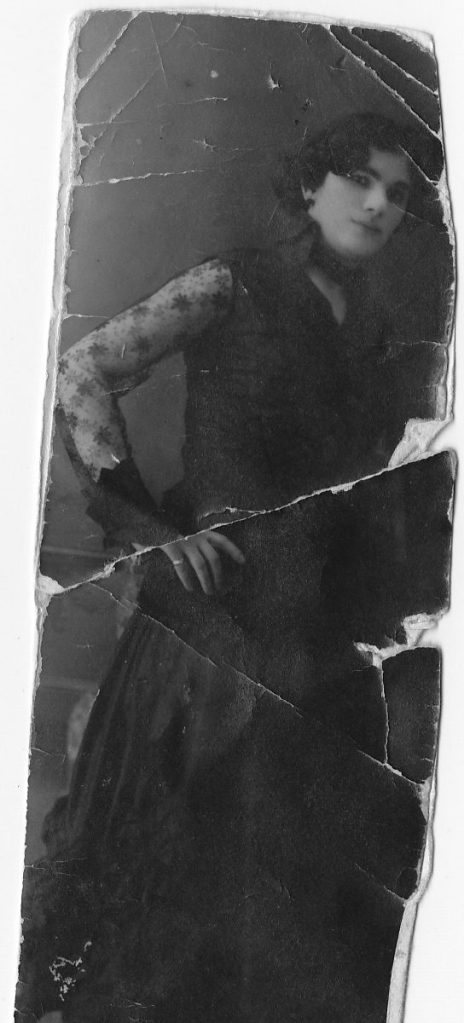
Who are these women?
Oh, Brett and the likes of her…
I’ve been ruminating on their mystique since I was an adolescent. How do these women do it—spellbinding everyone in their paths? They walk into any room and immediately draw everyone’s attention towards themselves. They know they can have anyone they want… How is that special je ne sais quoi of theirs conceived?
And why, in spite of their powers, most of them are so unhappy and frequently lost?
I have no clue, even though I’m related to a few…
Do you think my William McGrath would measure up to Jake Barnes? Read more about my novel on its Landing Page here –> Fireworks… the Novel
Discover more from Miriam Cohen's Secrets of Romantic Fairy Tales
Subscribe to get the latest posts sent to your email.

