
A short visual companion to this essay—not a summary, but a meditation in images—can be found here –> The reel
The basic rules of the game
There is all kind of creative media out there that manages to successfully deliver some fascinating tales without establishing their main characters. Ensemble novels with multiple key figures of equal narrative values. Stories dominated by invisible and unnamed narrators who reflect on the world around them. Deep explorations into human psyches from the prospective of multiple raconteurs… Stuff like that.
However, when it comes to romance, its basic structural concept inevitably mandates clear identification of the principle protagonists—the very subjects at the focus of the depicted affairs of the heart. And there have to be at least two of them. Because if it’s just one central character in love with himself, it’s not a romance—that’s a narcissistic tragedy.
On the other hand, more than two participants is quite alright. Triangles, quads, and even whole hordes of lovers—that’s totally acceptable, artistically speaking. That said, two souls drawn to each other by the powers of the universe is the most popular concept. It’s the gold standard of the romantic storytelling.
Hence, the demand for a Hero. And I mean it in the most non-binary, all-inclusive sense there is. I stated before that genders and orientations are irrelevant to me. And, thankfully, the contemporary pop culture frequently rises above them as well. But a Hero there must be.
In search of a hero
“Hero“ being the operative word; not simply a “protagonist”. And not just in the “heartthrob” sense either. Good looks are important. Especially, as the nature intended, on the masculine characters—considering the target audience. Yet, Chivalry—in its most encyclopedic meaning of courage, honor, justice, readiness to help someone in need—is far more valuable for the successful romanticism.
The challenge lies in the complexity of the present-day audience’s subconscious conditioning. It makes the task of conjuring up a character of satisfactory romantic quality within the settings of the contemporary reality far from a trivial matter. I know it only too well both as a cultural consumer and as a conjurer.
How do you even do it in our times, when the maxim “chivalry is dead” has been repeated so many times, it became a quotidian banality? There’s a reason why the fantasy and the superhero genres became so popular—those are the realms where heroism can be rendered believably.
Many notable contemporary creators have tried. Nora Ephron comes to mind. She understood probably better than any other auteur that decency and tenderness of the heart are far more important than looks. Her casting preferences for romantic leads reflect that. Meg Ryan is adorable. And Tom Hanks… Well, that guy is just an epitome of the perceived goodness. It’s like my daughter once said, “If it came out that he did something evil, the world would’ve ended.”
Shonda Rhimes—gender and color-blind like me, God bless her—is another creator who used to toil especially hard on formulating the “knights in shining whatever” for her audience…
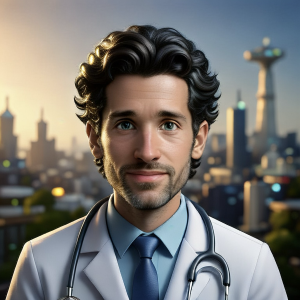
First, it was the top-20 world-renown neurosurgeon.

Then, the most powerful man in the world aka “the leader of the free world” with the name-nod to the Kennedy legacy…
And she loaded them up with sooooo many fine and rare qualities! They have powers to rescue people from the clutches of death—through cutting-edge surgical or clandestine military operations. Yet, they don’t hesitate to show respect to their lovers for their own brains, guts, and glory. And they are strong (at least most of the time), and smart, and witty, and funny… And they build princely residences for their companions…
Plus, the sex appeal, and the unbeatable charm, and the good hair…. And on top everything else, they are generous lovers with an unquenchable thirst for their—as Shonda likes to define them—loves of their lives. And amazingly, they actually believe in the possibility of true love!
However, shows bearing the label of “DRAMA“—medical drama, romantic drama, political thriller drama, etc.—are meant to deliver at least some semblance of the psychological realism pertaining to our times. And so, the writing rooms responsible for building such characters’ arcs over the long multi-season stretches are inevitably forced to construct some plot points, in which the heroes—to put it mildly—disappoint. Because that what happens in real life: our heroes suck from time to time. And the human shortcomings are as many as the heroic values.
They may have wives and/or girlfriends. A quite common and unfortunate circumstance that delivers our heroines into the dark realm of “the other women”. Also, most of them simply cannot be alone. If, God forbid, they find themselves unattached, they sooner settle into some relationship of convenience than wait while the-one-and-only tries to figure out this complicated shit we call feelings on her own.
And their egos are hella fragile! Oh, her standards for me are too high; she expects too much of me. When I don’t measure up, it makes me feel like a failure! Boo-hoo! And that makes them go and do some selfish shit that hurt our heroines… Plus, the reality of people dying—sometimes through their negligence or worse…
But of course, their soulmates forgive them. (Remember? Unconditional Forgiveness is one of the basic Romantic Rules of Engagement.) And we have to go along with that… What else is there to do while we are in the romantic domain? But, at the back of our minds, we always remember that these “heroes” have already shown us their “human” underbelly and, thus, they don’t quite fulfill our fairy-tale expectations.
Maybe that’s why Ms. Rhimes switched from the contemporary “realism” to the obscurely British, vaguely Regency, and mostly phantasmagorical settings… I don’t know… All I’m saying is that the business of semi-realistic romantic heroes is tough…
In fact, I challenge you, my readers, to name your favorite contemporary romantic hero. And I want to reiterate that by “contemporary” I don’t just mean created any time between WWII and present, but also someone who recognizably belongs in this period.
I will even start you off by discussing my own pick for the recipient of this title—clearly revealed in this post’s feature image…
My very personal choice
Actually, I’ve been contemplating this matter for decades. And the truth is that so far not a single fictional character was able to sway me from my personal choice of the most romantic hero of the contemporary pop culture—Butch Coolidge of the Pulp Fiction fame.
I know, I know… I expect most people to be initially shocked by this choice of mine. Some readers might think that I’m inverting the trope here altogether… A romantic hero? Butch is rugged, violent… Yet—and I hope you will agree after I break it down for you—he is utterly devoted in a way that is absolutely primal and mind-blowingly rare…
Look, here is a man in a dire peril. Embroiled in a dangerous scheme that, on one hand, can possibly get him out of the business of being told what to do by some ruthless moneybag; but on the other hand, caries about 99% probability of rendering him dead. And (!) he just killed a man with his own—gloved, not bare, but still—hands. He is truly, by the very definition of it, running for his life…
Yet, what he has to say about all that is: “Fabienne, mon amour, notre aventure commence…” He doesn’t bury her in his fears and anxiety—he promises that they won’t be found… He baby-talks to her, calling her “sugar pop”… She asks him to make spoons and he goes on spooning with her… She demands a promise and he tells her that he wants her to be with him forever… She asks for the “oral pleasure” and he obliges…
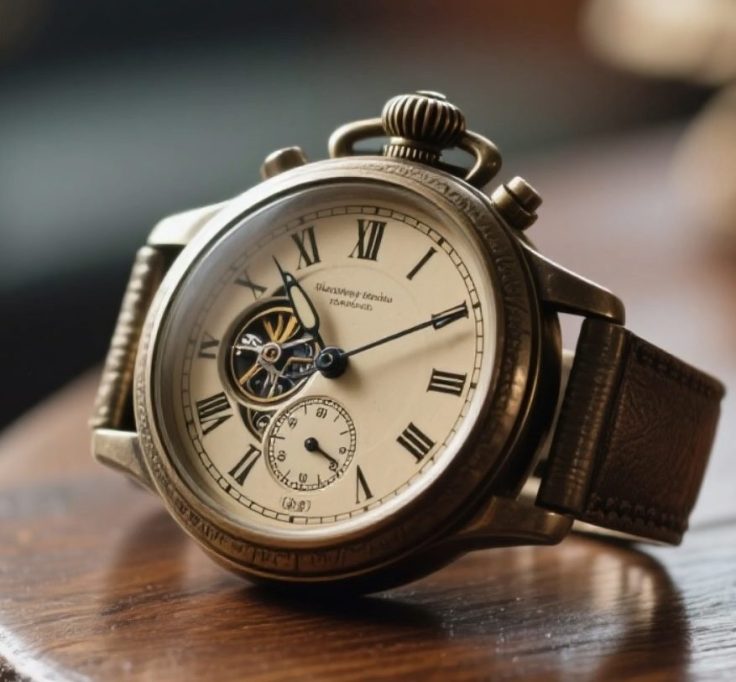
The one thing he wanted from her, escape-wise, was to pack his precious possession – the gold watch passed on to him from his father, who did not survive the Nam’s horrors… And that’s exactly what Fabienne didn’t do: she thought she did, but she forgot…
And, yes, Butch freaks out at first: it’s not easy to handle emotions of such a loss… That cherished heirloom… But one look at her distress calms him down: he doesn’t blame her. It’s not her fault. He blames himself—he should’ve impressed the importance of the watch… He will just have to go and get it. “I love you… Here’s some money… Have a great breakfast…”
And off he goes on that unforgettable journey: Sneaks back into his apartment and grabs the watch. In self-defense, kills Vincent Vega with the smooth gangster’s own compact submachine gun. Crashes Fabienne’s Honda into his archenemy Marsellus Wallace—dandily carrying a box of Japanese donuts from the restaurant right across Butch’s building. Gets broad-sided by a car in the cross-traffic. Blooded and limping, runs away from Marsellus and his .45 Automatic into a pawn shop…
It’s a funny thing about North Hollywood pawn shops: apparently crazy shit happens there… Especially when they are owned by murderous sadists with shotguns and secret dungeons in the back… And so Butch—with Marsellus right by his side—both get tied up in chairs, with red gag balls in their mouths.
He watches Marsellus being dragged away by the rapists. With harrowing sounds in the background, out of sheer terror, he summons inhuman force from within to free himself… He is ready to run and leave all the threats to his life and well-being behind him…
But you know, for the heroes, there is the personal safety and there is the Honor Code. Thus, he makes his choice, rising to the mythological level of heroism… And isn’t his choice—the Katana—is the most appropriate noble option ever? It slices Maynard like butter and cowers Zed, thus forging an unbreakable pact between Marsellus and Butch. Who—dazed by his own uncommon valor, the narrow escape from violation and death, as well as the sudden freedom—gets on Zed’s bike…
All that, just because his princess forgot to pack his irreplaceable memento… Yet, does he blame her? Does he even mention any of these horrors when he gets back to her? No! Instead he asks here, “How was breakfast?”
My hero!
Is it just good acting or the personality shines through?
I can’t even imagine any other actor but Bruce Willis playing Butch. It scares me to imagine how the whole movie would’ve played out for me if Matt Dillon (Tarantino’s first choice) actually decided to take the part. (He—like the rest of them, including Bruce Willis—wanted to be suave Vincent Vega… And how the hell would that work out without Travolta’s disco strut and moves? What a nightmare!) Nothing personal, I actually like him a lot in many of his movies: Little Darlings, The Outsiders, Singles… But here—uh, hell no…
I guess some universal power was watching out for Quentin, Bruce, and the millions of fans by giving the writer/director an inspiring insight to suggest that Mr. Willis should read the script with Butch in mind! I suppose that’s one of the side effects of having a momentous surge of genius: the ability to perceive the inner truth.
The thing is, if you actually take a minute to contemplate Bruce Willis beyond Butch, you will see that this unique combination of fearless morality and choosy gentleness hidden behind the prickly mannerism has always been his signature acting trait. You know, what I’m talking about… Moonlighting, Die Hard, The Fifth Element…
He carried that debonair demeanor of his through most of his memorable roles. The swagger, the brawly undercurrents, the nearly imperceptible smirk at the corners of his mouth… The eyes that can be so menacing and then so soft—depending on who he is looking at… The reluctant heroism that stems not from the arrogant bravado, but out of the innermost sense of honor…
He maintains this inconspicuous magnetism even within the eerily mystical environment created for him by M. Night Shyamalan. The caring ghost who lingers to help his patient and ease his wife’s sorrow. The superhero who didn’t even know he had any superpowers in him until the supervillain leaves him no choice… So compelling! You can definitely say it’s his trademark…
And believe me, I’m the first to say that those who think they know anything at all about the private lives of celebrities—even the ones with outlandishly public profiles—are fools. But even the most prudent of us—the pop-culture lovers—can allow ourselves some speculations. And with that in mind, I’m going to suggest that someone who hangs out with his ex-wife and her new young husband for the sake of the kids, is probably a decent man off screen too… Remember those 2003 photos by Kevin Winter? Bruce looked genuinely happy there, God bless him…
The Runner-up
Yep, I am actually prepared to award the red ribbon for the second place as well! And that would go to… Severus Snape—with his unyielding, life-long love for Lily Potter (née Evans), which determined the course of his entire life… and death.
And I know, I know – he is a wizard, who spent most of his life in that famous school of magic… And yet, he is also our contemporary hero—as most of J.K. Rowling characters are. Born in some industrial town in the English Midlands the same year I was born… Walking the streets of London when his quests demanded it of him… Living through the quite relatable struggles and torments of his life… Sacrificing himself to his destiny… Definitely a notable romantic hero.
So, tell me, who is the one you pick?
Curious to find out how my William McGrath fares as a romantic hero in Fireworks and Other Illuminations? Visit the novel’s dedicated Landing Page “Fireworks and…” the Novel
Discover more from Miriam Cohen's Secrets of Romantic Fairy Tales
Subscribe to get the latest posts sent to your email.

